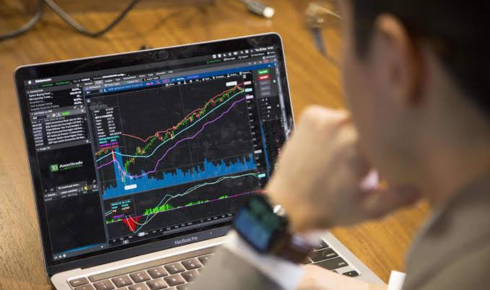
In the high-stakes world of Indian equity trading, information advantage is everything. Before most retail investors even switch on their trading terminals, professional traders have already absorbed the latest movement from SGX Nifty Live and mapped it against key technical levels. They have also noted the trend in Nifty Bank overnight options data, factored in any significant news from the domestic corporate landscape, and refined their trading plan for the session. This preparation is not accidental — it is deliberate, repeatable, and directly correlated with trading performance.
What Separates Successful Traders from the Rest
It is rarely intelligence or information access that distinguishes traders who are consistently lucrative from those who struggle. The majority of market-relevant information is accessible to everyone in the era of the internet and real-time data. The true difference is in the way information is prioritized, processed, and used. Clear, rule-based, and emotionally disciplined decision-making frameworks are developed by successful traders.
A defined market view based on pre-market preparation, certain price levels that initiate action, explicit rules position sizing based on risk tolerance, and non-negotiable stop-loss levels that are never compromised are the main components of this framework. Traders that follow this strategy have far more consistent results over time and much less emotional upheaval during the trading day.
Reading the Market Through Sector Rotation
Studying regional trends is one of the most useful tools in a vendor’s analytical toolbox. Money no longer vanishes in the financial markets; instead, it moves. Free capital moves into another quarter as the quality of one declines. A helpful road map for choosing stocks and sectors is to keep an eye on what institutional funds are coming in at various times of the market cycle.
Cyclical industries, including banking, real estate, and infrastructure, typically take the lead during times of economic optimism and expansionary monetary policies. Pharmaceuticals, FMCG, and information production are among the insurance sectors that outperform the overall macro scenario during times of uncertainty or tightening conditions. motion without being aware of the external rotation that underlies it.
The Power of Open Interest Analysis
In the derivatives market, open interest data provides a window into the positioning of market participants that price data cannot. A positive indication that new money is entering the market in the direction of the trend is when open interest increases in tandem with rising prices. Bearish momentum is confirmed when open interest increases in tandem with declining prices, indicating the creation of new short positions.
Turning points in the market are frequently indicated by the unwinding of open interest, which happens when positions are squared off. Following a prolonged advance, a significant drop in open interest could be a sign that longs are booking profits and preparing for a downturn or consolidation. Traders who combine open interest analysis with price action and volume data have a multi-dimensional view of the market that significantly improves their decision quality.
Intraday Versus Positional Trading: Choosing Your Battleground
Considering intraday trading or positional buying and selling is one of the most crucial choices for any trader. Every strategy has different capital requirements, disposition criteria, and risk-reward profiles. Intraday trading necessitates increased alertness, prompt decision-making, and the capacity to handle sudden reversals without experiencing emotional distress. Position trading demands perseverance, confidence in one’s judgment, and the capacity to withstand brief spikes in volatility without compromising a well-reasoned thesis.
Before switching to shorter time horizons, many astute investors advise novices to begin with positioning techniques. Because there are fewer trades, position trading typically results in cheaper transaction fees, less noise in short-term rate swings, and more time for evaluation. As talent and experience develop, traders can continue to incorporate short-term elements into their approach.
Using Volatility Indices as a Fear and Greed Barometer
The amount of implied volatility priced into benchmark index options is tracked by India’s fear gauge, the implied volatility index. When this index is high, it indicates that market players are paying high premiums to hedge their holdings because they anticipate large price movements. Complacency, which frequently accompanies abrupt and severe market corrections, is indicated by a low reading.
When the volatility index reaches severe levels in either direction, contrarian traders frequently search for opportunities. An exceptionally high reading can suggest that markets are oversold and that panic has peaked, providing a buying opportunity for those who are prepared to take the opposite side of the trade. A very low number could indicate that a correction is long overdue and that markets are priced for perfection. Using volatility data as a contrarian tool adds a valuable dimension to any trading strategy.
Continuous Learning as a Competitive Advantage
Markets are always changing. Regularly, new players, new instruments, and new market dynamics appear. Traders who make a commitment to lifelong learning—learning new analytical methods, looking for trends in their own trade history, and keeping up with macroeconomic and regulatory changes—maintain a competitive advantage that grows over time.
at particular, the Indian market is at an exciting phase of growth. Institutional infrastructure is strengthening, new items are frequently released, and retail participation is expanding quickly. The opportunities in Indian equities are more appealing than ever for traders who approach the market with discipline, curiosity, and a long-term outlook.