Pouring a glass of water should be one of the simplest parts of your day. Yet when that water has an unpleasant chemical smell or contains tiny particles, something as ordinary as staying hydrated becomes frustrating.
Perhaps you’ve noticed a swimming pool-like odor while taking a shower or discovered gritty residue at the bottom of your kitchen sink. While these problems may seem unrelated, both deserve investigation before they become ongoing household inconveniences.
For homeowners throughout Northeast Florida, properly selected water filtration equipment can address several common water quality concerns.
With professional guidance from Tri-County Water Specialists, families can explore treatment technologies based on their property’s individual water conditions. Understanding where these problems originate is the first step toward finding a practical, long-lasting solution.
Understand Why Your Tap Water Has an Unpleasant Chemical Smell
Municipal water suppliers use disinfectants to help control harmful microorganisms during water treatment and distribution. Although this process serves an important public health purpose, some homeowners dislike the taste or smell associated with residual disinfectants.
If you’ve noticed a strong chlorine taste or odor when filling a drinking glass or running your shower, appropriately selected carbon filtration may help improve your everyday water experience.
Activated carbon works through a process known as adsorption, in which certain substances interact with the surface of the filtration media.
However, filtration effectiveness depends on several factors, including the disinfectant present, equipment design, contact time, and water flow rate.
For instance, water containing chloramine may require different filtration media or longer contact times than water containing free chlorine.
These differences explain why professional evaluation is valuable before purchasing treatment equipment.
Imagine preparing your favorite herbal tea without an unwanted chemical flavor competing with its natural aroma. Suitable filtration may help make beverages and home-cooked meals more enjoyable.
Nevertheless, noticeable disinfectant odors don’t automatically indicate unsafe drinking water. Likewise, removing an unpleasant smell doesn’t establish that water is free from harmful contaminants.
If your water suddenly develops an unusually strong chemical odor, contact your water supplier to investigate the change before assuming that filtration alone will resolve the issue.
Improve Household Water Quality With Complementary Filtration Technologies
A single filtration technology doesn’t necessarily address every water quality concern. Suspended particles and dissolved substances behave differently, making complementary treatment stages useful in many residential applications.
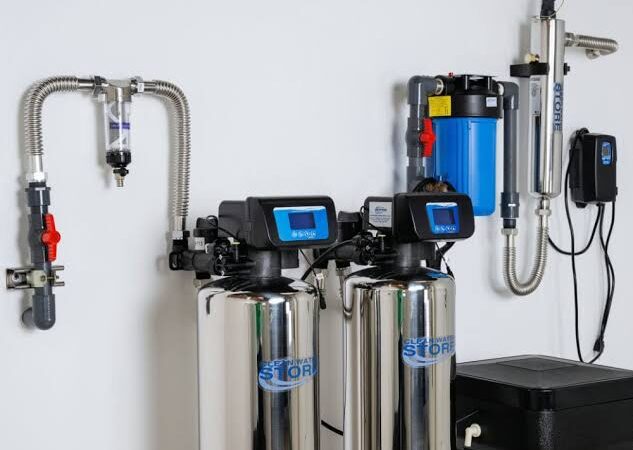
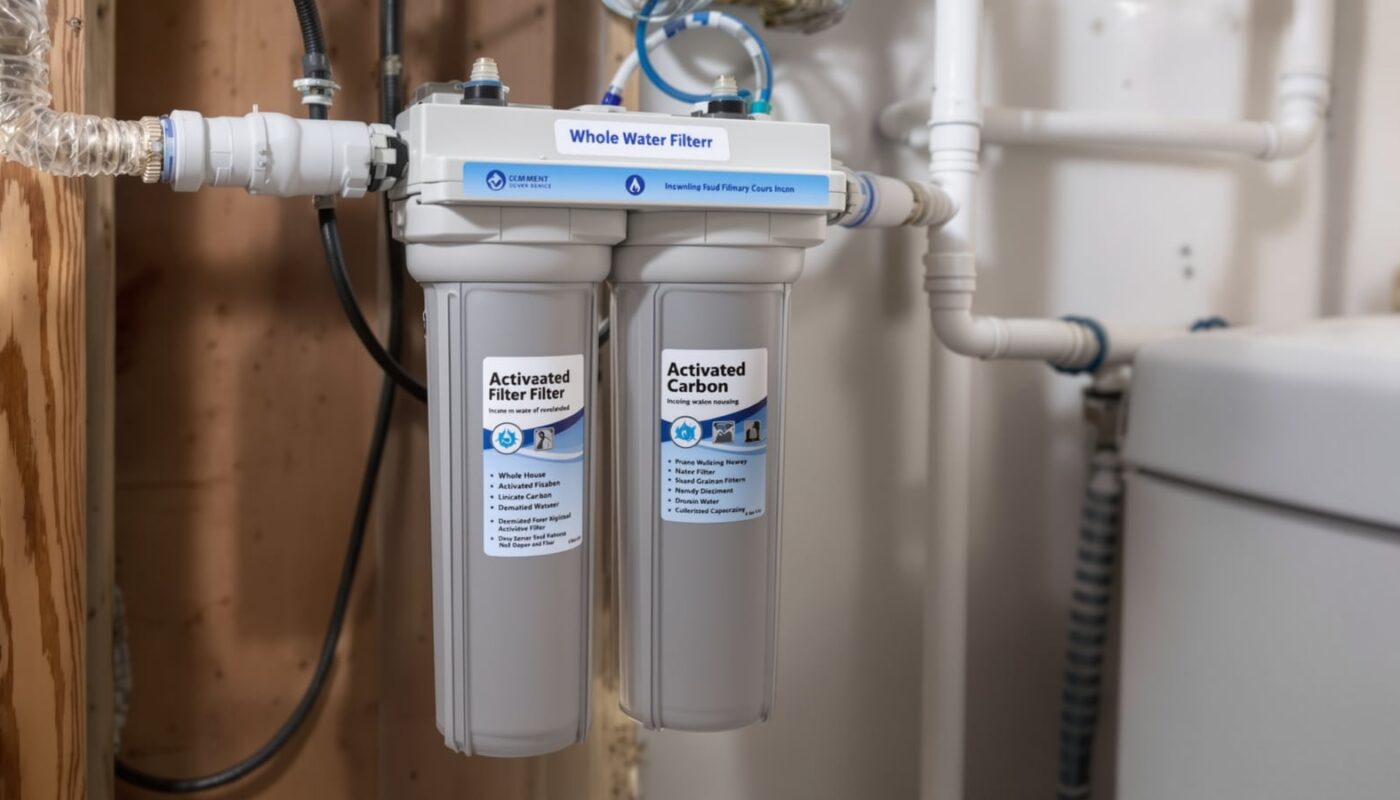
Installing whole-home sediment and carbon filtration allows homeowners to address selected particulate matter and unwanted tastes or odors through a centralized treatment arrangement.
Sediment filters physically capture suspended particles such as sand, rust, and dirt. Carbon filters, on the other hand, target certain dissolved substances responsible for undesirable water characteristics.
When properly configured, sediment filtration can also help protect downstream treatment components from excessive particulate accumulation.
Installing these technologies near the property’s main water supply allows treated water to reach connected faucets, showers, and appliances.
Potential advantages of an appropriately designed system include:
- Reduced suspended particles in household water.
- Improved drinking water taste and odor.
- Less particulate accumulation in faucet aerators.
- More enjoyable showering and cooking experiences.
- Reduced reliance on separate faucet-mounted filters.
- Simplified management of household filtration equipment.
However, equipment capacity and filtration media must match your existing water conditions.
A busy household with multiple bathrooms may require greater treatment capacity than a smaller property with relatively modest water consumption.
Professional sizing helps balance filtration effectiveness with adequate water flow during periods of high demand.
Investing in suitable equipment from the beginning can prevent unnecessary maintenance expenses and disappointing treatment results.
Investigate the Causes of Gritty Water Around Your Home
Finding tiny particles in your drinking glass or around bathroom fixtures can raise understandable concerns about your water supply.
Persistent sediment or grit in faucets may originate from several sources, including private well conditions, deteriorating plumbing, mineral accumulation, or temporary disturbances within water distribution infrastructure.
Northeast Florida homeowners who rely on private wells may experience suspended particles associated with groundwater conditions or well equipment problems.
Properties receiving municipal water can also experience occasional sediment issues, particularly following disturbances within distribution pipes.
However, the location of the problem can provide useful clues.
If particles appear exclusively at one faucet, the issue could involve its aerator or nearby plumbing. If several outlets are affected, investigating the incoming water supply may be appropriate.
Sediment filters are available in different configurations and micron ratings. Choosing a filter that’s unnecessarily fine may restrict water flow or require frequent replacement, while a filter with openings that are too large might allow unwanted particles to pass through.
An experienced water treatment professional can help determine which filtration arrangement suits your property’s conditions.
Addressing the underlying cause is equally important. Filtration may capture particles, but it cannot repair deteriorating pipes or damaged well components.
Why Water Testing Should Come Before Equipment Installation
Buying filtration equipment based solely on visible particles or unpleasant odors can lead to unnecessary expenses.
Different water quality problems require different treatment approaches. For example, a conventional carbon filter won’t significantly reduce hardness minerals, while a sediment filter cannot reliably remove dissolved chemical contaminants.
Professional assessments can help identify relevant water characteristics and guide equipment selection.
Depending on your concerns, testing may examine disinfectant concentrations, hardness levels, iron, turbidity, and other selected measurements.
Private well owners should also arrange appropriate laboratory testing for potentially harmful contaminants according to public health recommendations.
Understanding your water supply helps you avoid purchasing equipment that doesn’t address your actual needs.
Protect Your Plumbing Fixtures and Household Appliances
Water-using appliances represent substantial household investments. Excessive suspended particles can contribute to clogged inlet screens, restricted water flow, and certain maintenance problems.
Appropriate sediment filtration may help reduce particulate accumulation within connected equipment.
However, if excessive hardness is also present, additional water softening may be necessary to address future mineral scale formation.
Combining suitable technologies allows homeowners to tackle different water quality concerns without expecting one filtration stage to accomplish everything.
Maintain Your Filtration System for Consistent Performance
Regular maintenance is essential for keeping filtration equipment working effectively.
Replace sediment cartridges according to manufacturer recommendations, service carbon media when required, and monitor changes in water pressure, taste, or odor.
Keeping simple maintenance records can help you anticipate replacement expenses and recognize developing performance issues.
Periodic follow-up testing also provides a useful way to evaluate treatment effectiveness over time.
Enjoy a Better Water Experience in Your Northeast Florida Home
Unpleasant water tastes and gritty residue shouldn’t become permanent household frustrations.
Start by identifying the source of your concerns, reviewing appropriate filtration technologies, and selecting equipment that matches your property’s requirements.
Consider contacting Tri-County Water Specialists to discuss personalized treatment recommendations for your Northeast Florida home.
With informed decisions and consistent maintenance, a thoughtfully designed filtration system can make daily activities more enjoyable, simplify household upkeep, and deliver lasting practical value.