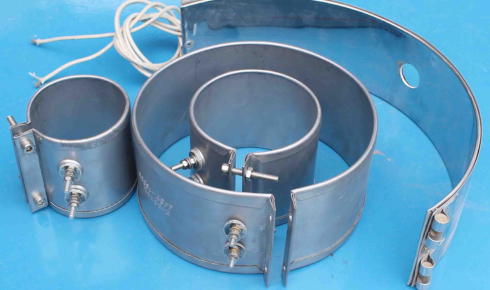
How Do Mica Band Heaters Transfer Heat to Barrels and Cylinders?
Heat transfer in industrial equipment depends on more than power alone. The way thermal energy moves from a heater into metal surfaces determines efficiency, temperature stability, and equipment lifespan. Understanding how mica band heaters deliver heat explains why they remain a reliable solution for barrels, cylinders, and processing components across many industries.
Conducting Heat Directly from the Heater to the Metal Surface
Mica band heaters rely on direct conduction as their primary heat transfer method. Electrical current flows through resistance wire embedded inside the heater, generating heat that immediately contacts the inner metal sheath. This heat passes straight into the barrel or cylinder surface without relying on airflow or radiant gaps. Direct contact minimizes wasted energy. The tighter the heater fits against the metal, the faster heat moves into the surface. This is why surface preparation and sizing play such an important role in overall performance for mica band heaters used on industrial equipment.
Clamping Tightly so Thermal Energy Moves with Minimal Loss
Clamping pressure determines how much heat actually enters the metal. A loose band creates air pockets that slow heat transfer and force the heater to work harder. Properly tightened clamps push the heater against the barrel, reducing insulation loss at the contact point. Mechanical pressure also improves response time. With less resistance between surfaces, the heater reaches target temperature faster and maintains it more evenly. This is one reason mica band heater price often reflects build quality and clamping design rather than wattage alone.
Using Mica Insulation to Spread Heat Evenly Across the Band
Mica insulation plays a critical role inside the heater assembly. Thin mica sheets separate resistance wire from the metal housing while allowing efficient heat flow. This structure spreads thermal energy across the entire band instead of concentrating it in one area.
Even distribution reduces hot spots. Consistent surface temperature protects barrels from distortion and improves process control. Mica band designs excel here, making them suitable for applications requiring steady, uniform heating.
Wrapping the Heater Around Barrels to Maximize Contact Area
Unlike cartridge-style heaters, mica band heaters wrap around the full circumference of the barrel. This design dramatically increases contact area, allowing heat to enter from all sides instead of a single point.
Greater contact area means smoother temperature rise. Heat surrounds the cylinder evenly, reducing internal stress and improving material flow inside the barrel. This wrapping design explains why mica band heaters are common in plastic processing and extrusion systems.
Transferring Warmth Through Metal Housing to the Cylinder Body
The outer metal housing acts as both a protective shell and a heat transfer bridge. Once the resistance wire heats the housing, thermal energy moves through the metal and into the cylinder wall. The housing material directly affects transfer speed.
High-quality housings conduct heat efficiently while protecting internal components from vibration and contamination. This balance keeps heat moving where it belongs while extending heater service life in demanding environments.
Maintaining Close Contact to Reduce Thermal Resistance Points
Thermal resistance occurs anywhere heat encounters gaps, uneven surfaces, or poor material contact. Even small imperfections can slow heat flow and reduce efficiency. Mica band heaters depend on smooth barrel surfaces to perform correctly.
Surface condition matters more than many operators realize. Corrosion, residue, or warping can interfere with contact. Maintaining clean, round barrels helps heaters transfer energy with less electrical demand and better temperature stability.
Heating Uniformly Along the Band for Consistent Temperature Rise
Uniform heating prevents temperature swings that affect product quality. Mica band heaters are engineered so resistance wire spacing delivers consistent output along the entire band length. This design avoids localized overheating.
Consistent temperature rise protects both the heater and the barrel. Materials inside the cylinder heat evenly, reducing process variability. This uniformity is especially important when comparing mica nozzle heater designs to band-style solutions for different zones.
Drawing Power That Converts Electrical Energy into Usable Heat
Electrical energy enters the heater through terminals and flows through resistance wire. That resistance converts electricity into heat, which immediately transfers through mica insulation and metal housing. The efficiency of this conversion determines operating cost.
Well-designed mica band heaters convert most input power into usable heat rather than loss. Proper voltage matching and watt density selection ensure electrical energy supports production goals without overstressing components.
Balancing Watt Density to Match Barrel and Cylinder Heating Needs
Watt density defines how much power is applied per square inch of heater surface. Too much density risks overheating and damage, while too little limits performance. Matching watt density to barrel material and application is essential. Correct balance improves longevity and temperature control. It also influences mica band heater price, as custom watt densities often require specialized construction. Proper selection ensures consistent heat without sacrificing durability.
For manufacturers seeking reliable heating performance, Thermal Corporation offers expertise in heater design, application-specific sizing, and material selection to support efficient heat transfer across barrels and cylinders while meeting demanding industrial requirements.