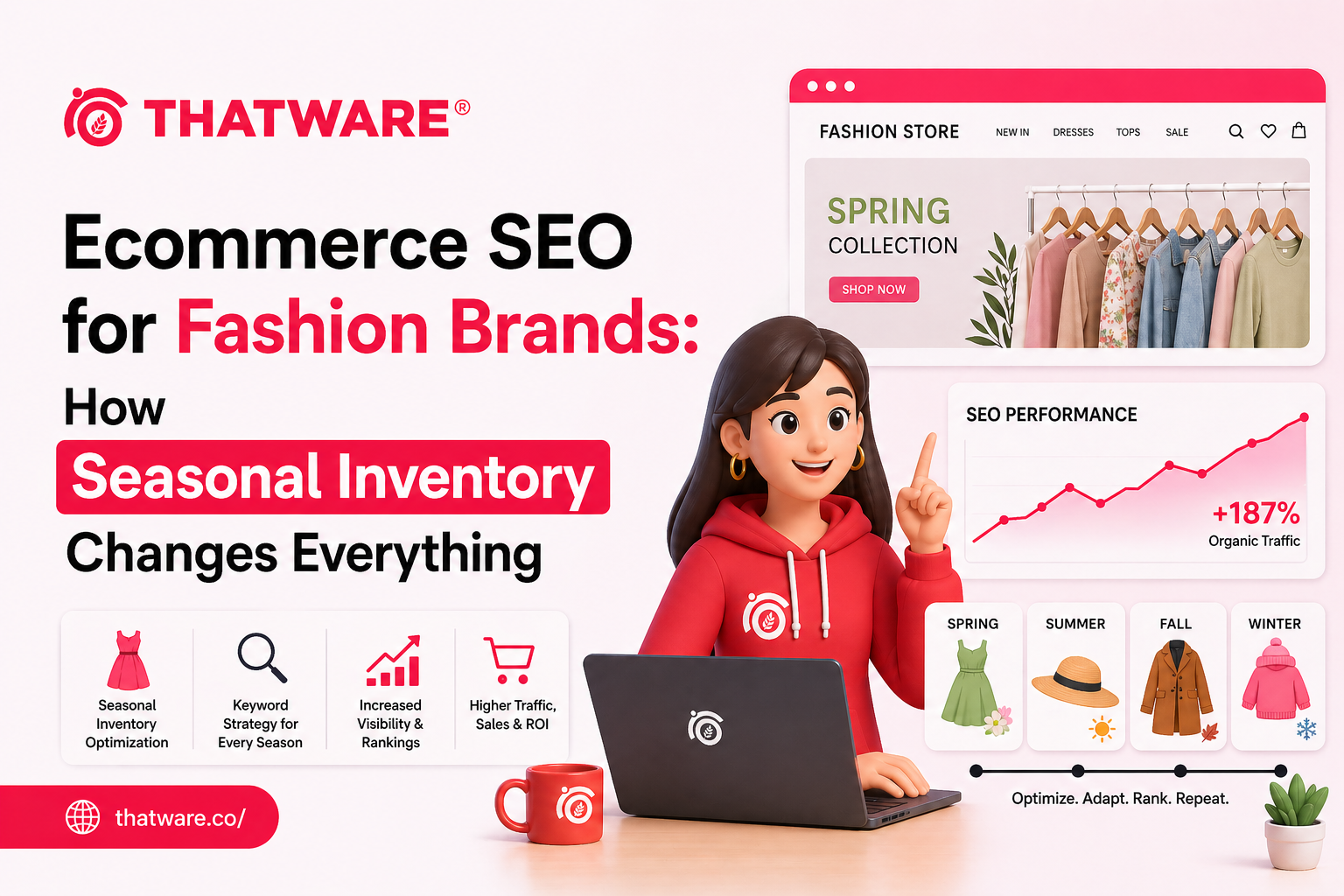
Fashion e-commerce and SEO have a fundamental tension baked into them that most brands never fully resolve. SEO is a long-term game. Fashion is a seasonal, trend-driven, inventory-sensitive business where last season’s bestseller is this season’s clearance item and this season’s hero product didn’t exist six months ago. The ecommerce seo agency that understands how to bridge that gap — building durable organic presence while managing the churn of seasonal inventory — delivers something genuinely valuable. The ecommerce seo experts who’ve worked deeply in fashion know that the standard e-commerce SEO playbook needs significant modification to work in this vertical, and the modifications are non-obvious.
Here’s what actually works for fashion brands in organic search.
The Product Lifecycle Problem
Every fashion brand has a version of this problem. A summer dress gets launched in March, optimized for search, starts ranking in April, peaks in June, goes on sale in August, and disappears from the catalog in September. All the organic equity built during that product’s lifecycle — the page authority, the internal links, the external links if it earned any — either goes to waste or needs to be carefully redirected.
Multiply that across hundreds or thousands of SKUs and you have an SEO architecture that’s constantly decaying at the product level while you try to build long-term authority at the category level.
The solution isn’t to avoid optimizing product pages — they still drive meaningful traffic during their active seasons. The solution is to build a content and URL strategy that explicitly anticipates the lifecycle. Permanent URL patterns for recurring seasonal products (the summer dress you bring back every year gets a stable URL, not a new one), clear redirect strategies for discontinued products, and the bulk of your organic investment directed at category pages that persist year-round.
Category Pages as the Durable Foundation
In fashion ecommerce seo experts, category pages are where the real organic equity lives. “Women’s linen trousers,” “summer wedding guest dresses,” “oversized wool coats” — these terms have genuine search volume that persists across seasons, and well-optimized category pages rank consistently for them without the lifecycle problems that product pages face.
Most fashion brands underinvest here. Category pages often get a handful of filtering options, a grid of product thumbnails, and maybe one sentence of SEO-focused copy above the fold. Compare that to the fashion brands that dominate organic search in their categories: genuinely useful editorial content about how to wear, style, and select from the category, combined with well-structured product data, strong internal linking, and enough content depth that the page is actually useful to someone in the research phase of their purchase journey.
The investment in category page content compounds. A well-written, genuinely useful category guide for “workwear capsule wardrobe” earns rankings, earns external links, and maintains its value across multiple seasons with relatively modest updates.
Trend Content and the SEO Opportunity Window
Fashion trends create a particular kind of short-lived search opportunity that, handled well, can drive significant traffic and brand awareness even without long-term ranking durability.
When a trend emerges — a specific silhouette, a color palette, a celebrity-driven style moment — search volume for related queries spikes quickly and often subsides within weeks or months. Brands that can produce quality content around these moments quickly capture traffic that competitors miss. The challenge is moving faster than the typical content production cycle allows.
The brands doing this well have built streamlined content production workflows specifically for trend-responsive content: templates that allow fast creation, editorial processes that can move in days rather than weeks, and social distribution that amplifies organic content during the traffic spike window.
The SEO value isn’t just the immediate traffic. Trend content that earns social shares and links during its peak moment builds domain authority that persists long after the trend has passed.
Managing Duplicate Content Across Variations
Color and size variations are the bane of fashion SEO. A single product available in eight colors generates eight potential product page variants, each competing with each other and potentially creating thin content and cannibalization problems.
The technical solution requires a considered approach to canonicalization: deciding which variant (usually the most popular or the default display) should receive the canonical tag, how variant pages should be handled in indexation, and how internal linking should flow to concentrate authority on the canonical version.
Getting this right at the catalog architecture level before the site scales is far easier than retrofitting it onto thousands of existing product pages. But even for established catalogs, a systematic variant canonicalization audit typically yields meaningful technical improvements.
The Measurement Challenge
Fashion SEO measurement has particular quirks. Attribution is complex when customers research across multiple sessions and channels before converting. Seasonality creates year-over-year comparison distortions that can make strong performance look weak or weak performance look adequate.
The brands with sophisticated organic measurement for fashion use rolling 13-month comparisons to smooth seasonality, track category-level rankings rather than just individual product rankings, and measure organic’s contribution to new customer acquisition separately from repeat purchase traffic.
It’s more complex than standard e-commerce measurement, but it’s the complexity that makes the insights actionable rather than misleading.